U.S. nuclear innovation is on the rise as nuclear heavyweights
Germany and Japan head toward a possible decline in technical expertise,
Nuclear Regulatory Commission (NRC) Chairwoman Allison Macfarlane said
Thursday.
After the March 2011 nuclear reactor meltdown at Japan’s Fukushima
Daiichi power plant, Germany decided to phase out nuclear power by 2022.
Japan’s government also said it plans to eliminate nuclear power,
though it is unclear whether that will materialize.
Curtailing nuclear power in those two leading nuclear nations will
“probably” result in a shortage in technical proficiency there,
Macfarlane said at a discussion hosted by the Center for American
Progress, a left-leaning think tank.
“You’re probably not going to see a lot of young people becoming
nuclear engineers. And so this is a concern not only to the nuclear
industry, but to the regulators because you want to make sure that you
have adequate staff to ensure that these facilities operate safely,” she
said.
Read More...

Showing posts with label NRC Chairwoman Allison Macfarlane. Show all posts
Showing posts with label NRC Chairwoman Allison Macfarlane. Show all posts
Thursday, October 25, 2012

Thursday, October 4, 2012
Damaged San Onofre nuclear plant in Calif. submits restart plan for reactor
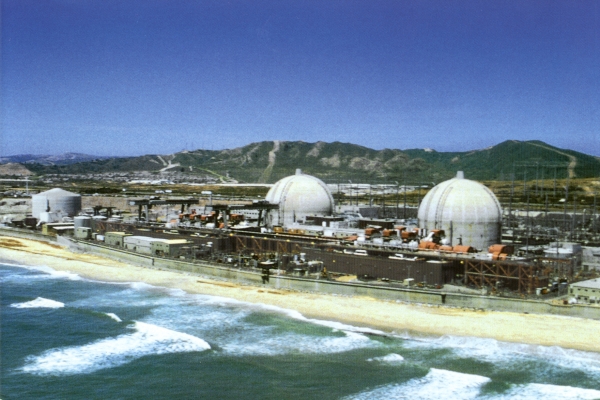
A plan to return even one reactor to service is a milestone for Southern California Edison, which has spent months unraveling what caused excessive tube vibration and friction inside the plant’s nearly new steam generators, then determining how it might be fixed.
But the plant is far from returning to robust operation.
Edison’s plan, which must be approved by federal regulators, calls for operating Unit 2 at reduced power for five months, then shutting it down for inspections. The outlook for the more heavily damaged Unit 3 is bleaker — no decision is expected on its future until at least next summer.
Meanwhile, the company is facing a state review of costs related to the long-running outage that could leave customers or shareholders with a huge bill for repairs and replacement power — a figure that had reached $165 million at midyear. The company did not update those figures Thursday.
Edison, a subsidiary of Edison International, filed its proposal with the Nuclear Regulatory Commission, which is expected to take months to review the details. The NRC has said there is no timetable to restart the plant.
“The agency will not permit a restart unless and until we can conclude the reactor can be operated safely,” NRC Chairman Allison Macfarlane said. “Our inspections and review will be painstaking, thorough and will not be rushed.”
Read More...
Sunday, July 1, 2012
US Senate confirms top nuclear power regulator
WASHINGTON, June 29 (Reuters) - The U.S. Senate on Friday confirmed geologist Allison Macfarlane, an expert on how to store radioactive waste from power plants, to head the Nuclear Regulatory Commission.
Macfarlane will serve out the year left in the term of Gregory Jaczko, who announced his resignation last month after being publicly criticized by fellow commissioners as being abrasive.
READ MORE...
Tuesday, June 12, 2012
Atomic ‘Agnostic’ Named for U.S. NRC Ties Industry Growth to Aid
[Commentary: Saying Allison McFarlane is agnostic or neutral on nucelar power is like saying Michael Schumacher is in neutral while his Formula 1 car is going 200 mph in reverse.... straight into a wall. This is yet another anti-nuclear pick by the Obama Administration.]
By Katarzyna Klimasinska
President Barack Obama’s pick to head the U.S. Nuclear Regulatory Commission has said atomic power can’t grow without government subsidies, criticized an industry-supported plan to dispose of spent fuel in Nevada, and said she was drawn to nuclear research because she got bored with geology.
“I would describe myself as agnostic; I’m neither pro-nuclear nor anti-nuclear,” Allison Macfarlane said in a June 2007 interview for the Atomic Show on The Podcast Network.“We’re not going to see a large expansion of nuclear power in this country unless there is a lot of government subsidy.”
READ MORE HERE...
Thursday, May 24, 2012
Obama taps Yucca Mtn critic to lead nuclear agency
[Commentary: U.S. nuclear power has just been delivered yet another setback. Gregory Jaczko hurt the growth of renewable nuclear power and green energy growth and now he is replaced with Allison Macfarlane who is fully endorsed by Harry Reid. Anyone endorsed by Harry Reid is hardly an ally of nuclear power in the United States. Expect more delays, cost run ups, regulations, and energy prices to continue to soar.]
By MATTHEW DALY, Associated Press
WASHINGTON (AP) — Moving quickly to stem a controversy, President Barack Obama on Thursday nominated an expert on nuclear waste to lead the federal agency that regulates the nation's nuclear power plants.
Allison Macfarlane, who served on a presidential commission that studied new strategies to manage nuclear waste, would replace Gregory Jaczko as head of the Nuclear Regulatory Commission. Jaczko announced his resignation Monday after a tumultuous three-year tenure in which he pushed for sweeping safety reforms but came under fire for an unyielding management style that fellow commissioners and agency employees described as bullying.
A White House spokesman said Obama believes Macfarlane is the right person to lead the commission, calling her a highly regarded expert who has spent years analyzing nuclear issues.
Macfarlane "understands the role that nuclear power must play in our nation's energy future while ensuring that we are always taking steps to produce this important energy source safely and securely," White House spokesman Clark Stevens said.
Stevens called the NRC crucial to protecting public health and safety and said Obama hopes the Senate considers her nomination quickly.
Macfarlane, 48, an associate professor of environmental science and policy at George Mason University in Fairfax, Va., wrote a book in 2006 that raised technical questions about a proposed nuclear waste dump at Nevada's Yucca Mountain.
Senate Majority Leader Harry Reid, D-Nev., who is the leading congressional opponent of the Yucca site, praised Macfarlane as someone who will make nuclear safety a top priority. Macfarlane's education and experience, especially her service on the blue-ribbon commission on nuclear waste, make her qualified to lead the NRC "for the foreseeable future," Reid said in a statement.
Reid said he continues to have concerns about Republican Kristine Svinicki, who has been nominated by Obama for a new term on the commission, but added that he believes Svinicki and Macfarlane should be considered together, continuing a recent Senate tradition of considering NRC nominees from opposing parties at the same time.
Svinicki, a nuclear engineer and former Senate GOP aide, was among four NRC commissioners who publicly criticized Jaczko's management style last year. The commissioners — two Democrats and two Republicans — sent a letter to the White House last fall expressing "grave concern" about Jaczko' s actions, which they said were abusive and "causing serious damage" to the commission.
No disciplinary action was taken against Jaczko, who has strongly denied the allegations.
Jaczko, a Democrat, announced his resignation ahead of a potentially blistering report due out soon from the agency's inspector general, which has been investigating Jaczko's actions for more than a year.
A former Reid aide, Jaczko led a strong response to the nuclear disaster in Japan and was a favorite of industry watchdogs, who called his emphasis on safety a refreshing change from previous agency chiefs who were close to the nuclear industry or who came from it.
But scientists, fellow commissioners and many rank-and-file staffers said Jaczko had created a chilled working environment at the NRC, which oversees safety at the nation's 104 commercial nuclear reactors.
The Nuclear Energy Institute, an industry group, called Macfarlane "an active contributor to policy debates in the nuclear energy field for many years" and urged the Senate to confirm her nomination as soon as possible.
"It would not serve the public interest to have her nomination linger," the group said. "We urge the Senate to confirm both Commissioner Svinicki and Professor Macfarlane expeditiously."
Sen. Barbara Boxer, D-Calif., chairwoman of the Senate Environment Committee, said Macfarlane's background and experience demonstrate a strong commitment to safety — a commitment she called especially important in the wake of the nuclear disaster at Japan's Fukushima Dai-ichi plant.
Boxer said she will schedule a joint hearing on the two NRC nominees in June.
Per Peterson, a professor of nuclear engineering at the University of California, served with Macfarlane on the nuclear waste commission, which was appointed by the Obama administration to make recommendations on how the nation should store and dispose of more than 71,000 tons of radioactive waste at dozens of sites across the country.
"I think she will be effective in leadership" of the NRC, "mainly because she listens," Peterson said of Macfarlane.
In a 2009 interview with Technology Review, Macfarlane acknowledged that most of the objections to the never-completed Yucca Mountain site were political, but added: "The technical objections are serious and real."
The area near Yucca Mountain is seismically and volcanically active, she said, adding that spent nuclear fuel could be stored safely at nuclear plants for decades.
The presidential panel recommended that the government start looking immediately for an alternative to Yucca Mountain. The report also recommended that responsibility for managing nuclear waste be transferred to a new organization, independent of the Energy Department.
LINK
Subscribe to:
Posts (Atom)